

Hoo says many of her friends are learning Google Gemini and Microsoft Copilot purely for the fun of it. — SHIRLEY HOO
Not many people like being called “old” and understandably so. In most parts of the world, Malaysia included, the language of ageing comes packed with assumptions that are usually demeaning, sometimes patronising, and often untrue.
Even the well-meaning clichés like “50 is the new 30” or “active ageing” usually fail to wipe away the images of frailty, forgetfulness, slowness and invisibility that come with the word “old” in an ageist society.
Even labels we assume to be harmless – “mature,” “senior,” “pensioner” – often reduce people to a category, carrying subtle undertones that suggest decline, limitation, or being “past one’s prime.”
As Malaysia steadily edges towards becoming an ageing nation, these stereotypes are not just inaccurate – they affect older adults adversely: How they are treated, represented and included (or not). They shape career opportunities, family expectations, healthcare attitudes and even public policy.
But are these stereotypes true in reality? Here is what four Malaysians in their 50s and 60s – each from very different backgrounds, lifestyles and careers – have to say about the stereotypes they are confronted with.
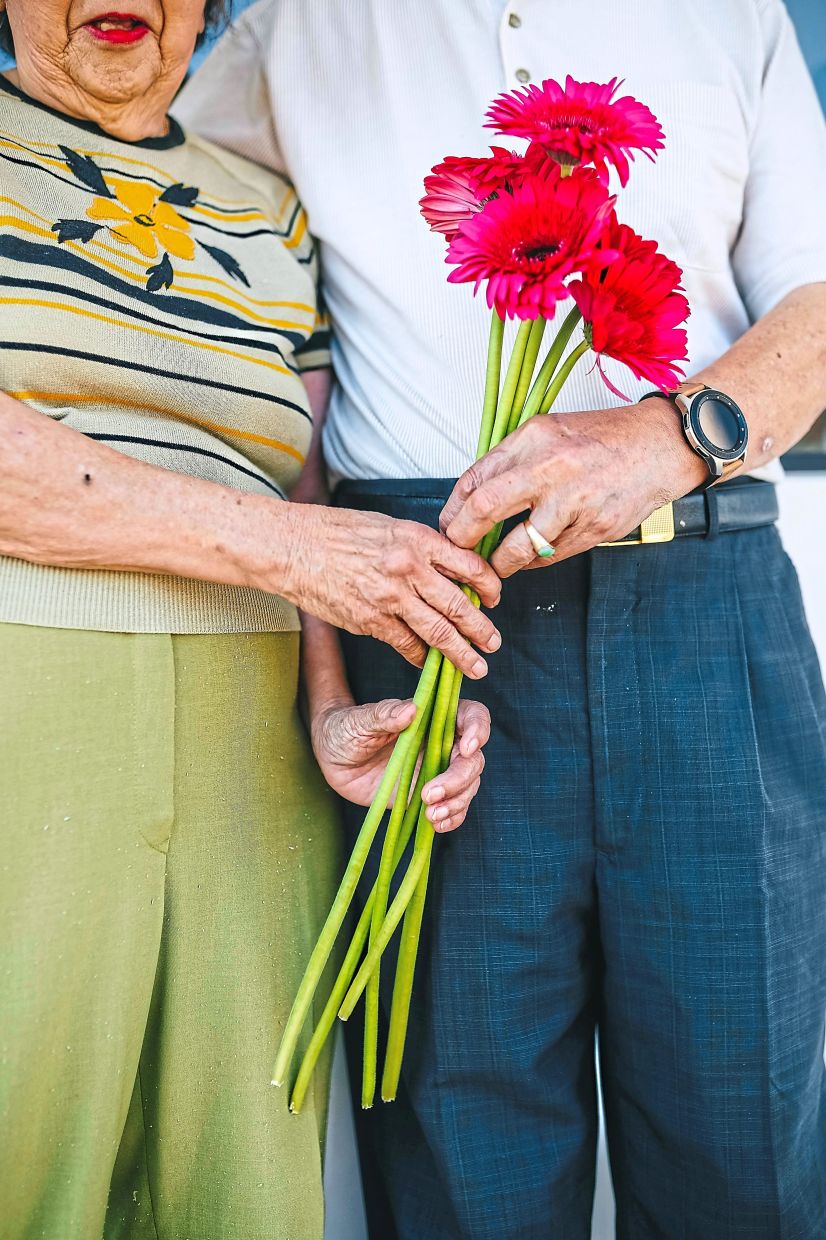 Romance is not only for the young or middle-aged, but ageist culture often treats it that way. — Pexels
Stereotype #1: Old means weak or frail.
This is perhaps the most persistent ageist assumption. Once someone crosses 55 or 60, their body is treated as if it has suddenly become fragile – voices soften (or, paradoxically, get louder), people slow their pace around them, and physical activities are gently discouraged “for their own good.”
For 56-year-old marketing communication director Shirley Hoo, this stereotype surfaces whenever someone assumes she needs protection.
She recalls volunteering for a friendly basketball match. A young man stepped in front of her, saying, “Basketball can be rough – I don’t want you to get hurt.”
She smiled, insisted on joining the game, and scored two points in 10 minutes. Only later did he learn she was a state coach’s daughter and had played for her city’s basketball team during her teens.
“He apologised, and I told him it was alright,” she says. “I understand their concern – but it does feel like I was underestimated.”
At 64, Hanim Mohd regularly walks, hikes and explores nature.
“Define weak,” she says firmly. “Yes, there is some decline in physical strength, but weakness does not always refer to muscles. Wisdom can outdo strength any day.”
And then there is 68-year-old Shaukani Abbas, an active freelance tour guide who conducts heritage night walks in Melaka.
“I get people asking me, ‘Aren’t you tired? At your age?’ They don’t see the passion – only the number,” he says.
Many older adults are more physically active than people half their age. The protective instinct of the younger generation, while well-intentioned, can rob seniors of agency and the joy of physical activity.
As Hoo points out, many of her friends are still in good health, fit and “independent in their lifestyle”, with some continuing to work on a contract, part-time or freelance basis even after retirement. And as she notes, many in their 80s are equally independent.
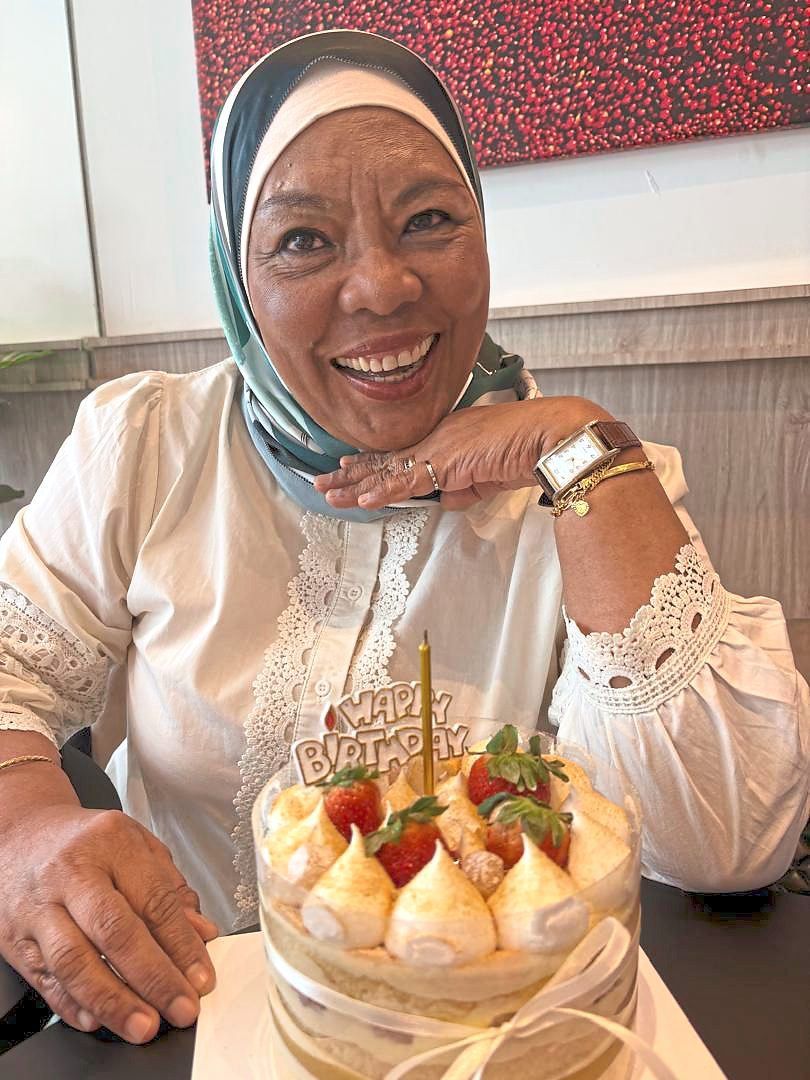 ‘We’re comfortable in our own skin, and we don’t give a cat’s whiskers about how others see us,’ says Hanim. — HANIM MOHD
Stereotype #2: Older people can’t keep up with technology
Are seniors technophobic? Are they really technologically incompetent, fearful of gadgets, and unable to adapt to the digital age? This is the prevailing stereotype: Seniors are seen as helpless without a grandchild to reset the router.
Shaukani encounters this constantly. As someone who regularly produces content for his social media platforms while writing a memoir, he often uses tools many assume belong exclusively to Gen Z.
“One day, while working with AI tools, a young chap came to me and commented, ‘Wah, uncle also knows how to use AI ah?’” he shares.
“They meant well, but the assumption was that seniors cannot learn new tech. It frustrates me because these stereotypes limit opportunities.”
Hoo shares a similar experience from corporate life.
“As I pulled out my laptop, a younger colleague immediately rushed over and said, ‘Don’t worry, I can do it for you — these updates can be really confusing,’” she says.
“In reality, I hadn’t asked for help. In fact, I’ve handled more complicated systems in the past.”
Hanim offers a different perspective: It isn’t that seniors can’t learn – it’s that the teaching style of the younger generation often lacks empathy.
“One has to be patient when teaching older people about technology,” she explains. “We weren’t exposed to gadgets the moment we opened our eyes. We tend to be more analytical and want things to make sense. For us, there’s no such thing as shortcuts.”
She recalls moments of “technological rudeness”: “It bruised my ego a little when a youngster became impatient while I was trying to do something online. They would snatch the gadget from my hands while rolling their eyes. That didn’t just hurt my ego – it hurt my feelings. I think it’s rude.”
The brain does not “freeze” at 60.
Hoo says she has retired friends learning Google Gemini and MicrosoftCopilot simply for fun.
As Hanim says: The barrier isn’t ability – it’s impatience.
 Shaukani hopes to show that ageing ‘is not a shutdown; it’s just a shift’. — SHAUKANI ABBAS
Stereotype #3: Unproductive and ‘Over the hill’
The belief is that retirement equals the end of one’s value. Older adults are viewed as having nothing left to offer the workforce or society, destined to sit idly and watch time pass.
“And the big one,” Shaukani notes, “is that once you retire, you stop contributing.”
Fifty-five-year-old Rajena Mookan is living proof otherwise.
The single mother, who retired from her role as an academic consultant for dyslexic and autistic students, continues working and is shifting into entrepreneurship by starting a baking business and handling events.
“There are times people remind me of my age, thinking I’m incapable of doing certain things,” Rajena says. “But there are things I can do better than the younger generations.”
Shaukani – perhaps one of the busiest “retired” men in Melaka – says firmly: “I’m definitely not slowing down. I still conduct walking tours, plan new tourism products, write my memoir, produce content, and guide younger guides.”
He believes age brings a type of productivity youth cannot replicate.
“For many of us, ageing actually gives clarity. We know what we want, we know how to contribute, and we finally have the confidence to choose meaningful work.
“I’m more active and productive now than I was in my 30s.”
Hanim echoes this: “People think older folks are not productive because they don’t recognise our potential. Productivity doesn’t look the same at every age. We contribute differently – with clarity, experience and focus.”
As Shaukani puts it, “Ageing is not a shutdown – it’s a shift.”
Seniors aren’t leaving the field; they’re simply moving into roles of mentorship, entrepreneurship and creative contribution. In fact, seniors quietly embraced the “gig economy” long before millennials did.
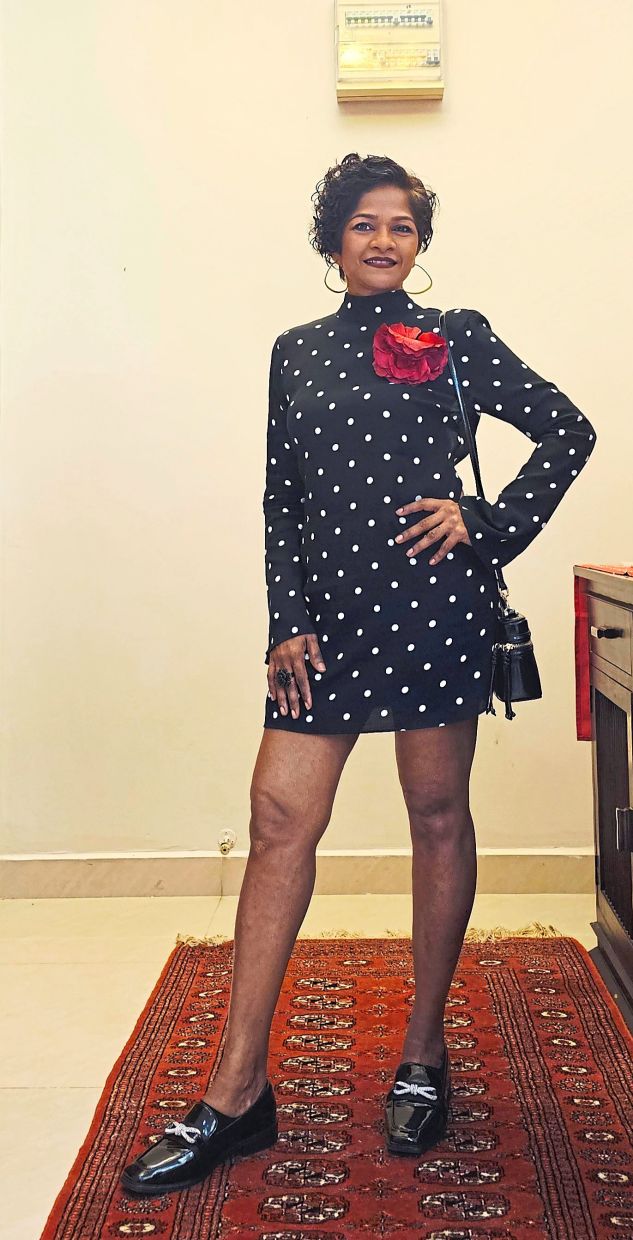 Rajena continues working by running her home-based bakery and event management business. — RAJENA MOOKAN
Stereotype #4: Seniors fade into the background, are undesirable
There is a common misconception that older people – especially women – “lose” their beauty and relevance with age. They are expected to fade into the background: to dress in beige or brown, stop caring about how they look, and certainly stop thinking about romance.
All four seniors interviewed used the word “invisible,” but for Rajena, it stands out as the defining feeling imposed on older adults: “People think ageing means we no longer exist — that we’re invisible.”
She says older women are often judged as having “let themselves go”, but the real issue is unrealistic expectations.
“People forget that maturity brings comfort. You don’t have to dress for validation. You dress for yourself.”
But she adds a firm reminder to the younger generation: “Not to forget that they also can fall in love.”
The idea that romance or emotional intimacy has an expiry date is a myth she is keen to dispel.
Hanim points to another aspect of the stereotype – that older women should dress “their age”.
“I think I contradict all these assumptions completely,” she declares. “From young until now, I dress as I please – which is definitely not boring – usually in colours people don’t expect older folks to wear.”
She adds a profound truth about confidence: “No longer attractive? That’s purely subjective.
People can feel attractive without anyone else validating them. With age and maturity, most older people are comfortable in their own skin and don’t give a cat’s whisker about how others see them.”
Beauty standards are evolving. The confidence that comes with age – the refusal to “give a cat’s whiskers” – creates a deeper, more grounded kind of attractiveness.
As Shaukani notes: “As you age, you know who you are. You choose joy. You choose meaning. That’s confidence – the most attractive thing of all.”
And as Rajena reminds us gently: The heart doesn’t wrinkle.
Stereotype #5: A Burden on the family and state
A common trope about seniors is that they are needy dependents who drain family resources and restrict their children’s freedom.
In Asian cultures, filial piety is strong – but it often morphs into the assumption that parents expect to be taken care of, or that they are helpless without their children. Interestingly, all four of the seniors interviewed express the exact opposite: Independence.
Hoo is passionate about correcting this misconception.
“If I could correct one misconception about ageing among Malaysians, it would be the belief that older adults should depend on the younger generation,” she says. “To me, it’s important to remain independent.”
Her reasoning is rooted in love for her only child.
“Our children deserve the freedom to live their own lives, to build their careers, enjoy their youth, and create their own journeys and dreams. As for us, we should focus on staying healthy, staying in our own home that is truly ours, and being financially independent as we grow older.”
Rajena echoes this perfectly: “I don’t want to depend on my son, and I value my independence.”
Shaukani, on the other hand, offers a different lens: “Seniors are not a burden – instead, we’re reservoirs of experience, creativity and resilience.”
The narrative that it is “time for seniors to be looked after” is increasingly outdated. Modern Malaysian seniors see independence as an act of love, freeing their children from the pressures of the sandwich generation.
The new narrative
These stereotypes, as Hoo wisely puts it, “are just another part of the life journey — something to take with a pinch of salt and a smile.”
While everyone is entitled to their assumptions, she tries to view them as constructive moments.
“I will tell myself to make every moment my moment, enjoy it and be blessed,” she says.
Shaukani leaves a final reminder: “Don’t underestimate seniors. Many of us are just getting started. We are not getting older – we are getting better.”

